
My Favourite Ideas for Collecting and Hanging Art

Art is so much more than something to fill an empty wall. It can set the colour palette, create a mood, tell your story and make your home feel unmistakably yours.
In fact, although we often think of art as the finishing touch, I believe it can be the perfect place to begin when decorating a room. A much-loved painting, a vintage flea market find or even a framed holiday memento can inspire an entire interior design.
You certainly don’t need to be a serious collector or spend a fortune. Some of the most interesting homes bring together original paintings, affordable prints, family photographs, children’s artwork and pieces collected over many years. What really matters is that you choose things you genuinely love, but there are some considerations to showing off your art works, so they enhance your interior.
Here are some of my favourite ways to collect and display art at home.
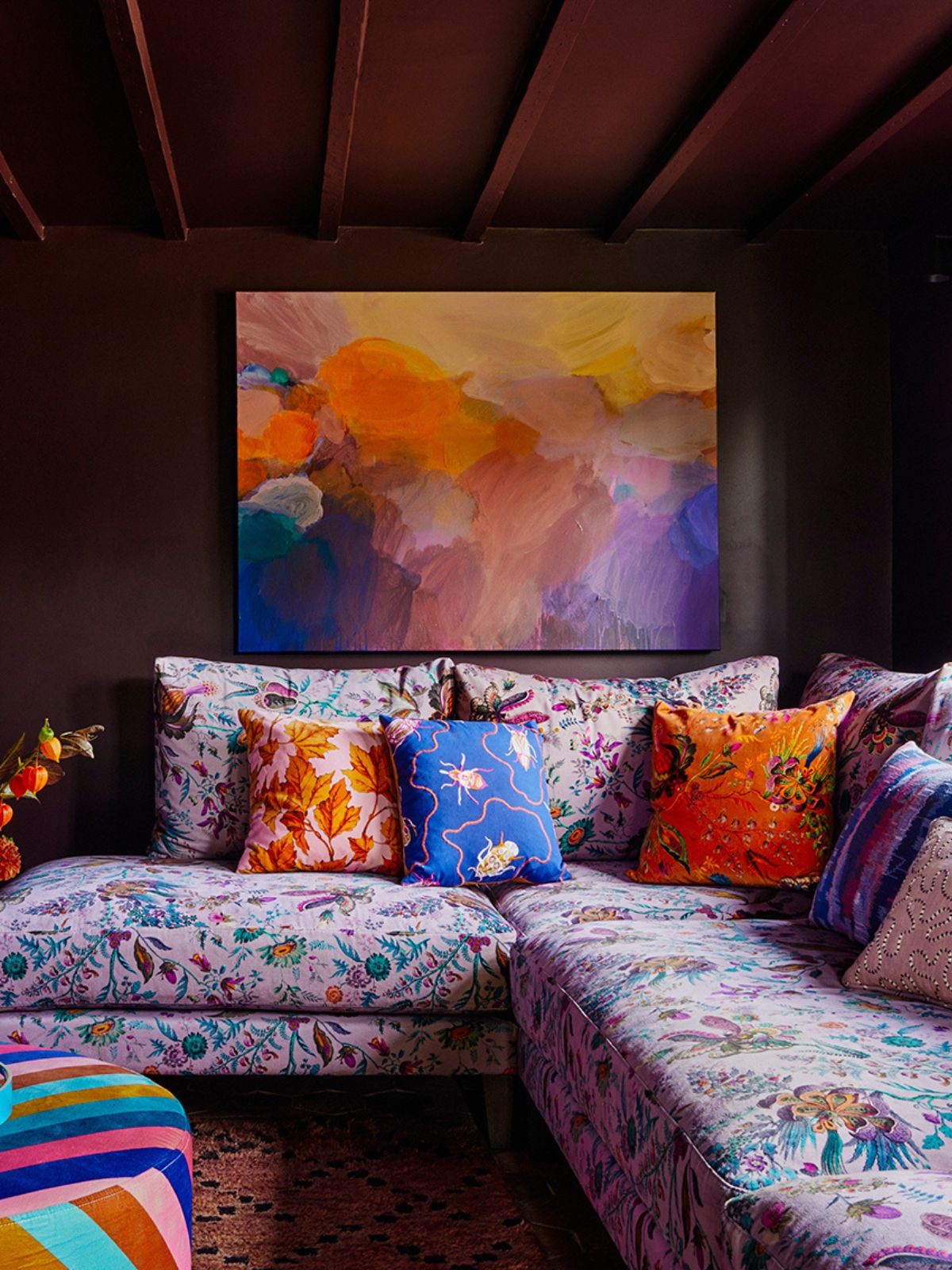
Painting by Sophie Abbot Artist, Grace Sofa by Love Your Home upholstered in Wonderland Floral Amethyst, paint from Little Greene in Córdoba, footstool upholstered in Sherbert Stripe
Let your art lead the room
If you’re starting a decorating project and have no idea which colours to choose, take a closer look at a piece of art you love. You might find your wall colour in the background, a sofa shade in a brushstroke or the perfect accent colour in an unexpected highlight.
In my TV snug, a beautiful painting of a sunset in Marrakech, by my friend and artist Sophie Abbott [link] inspired the whole scheme here. I picked out its rich, dusky sunset colours and echoed them around the room, creating exactly the warm, enveloping atmosphere I wanted for a space we mainly use in the evening.
Starting with art can also make decorating feel much less overwhelming. Instead of facing thousands of unrelated paint colours and fabrics, you already have a visual story and a colour palette to guide you.
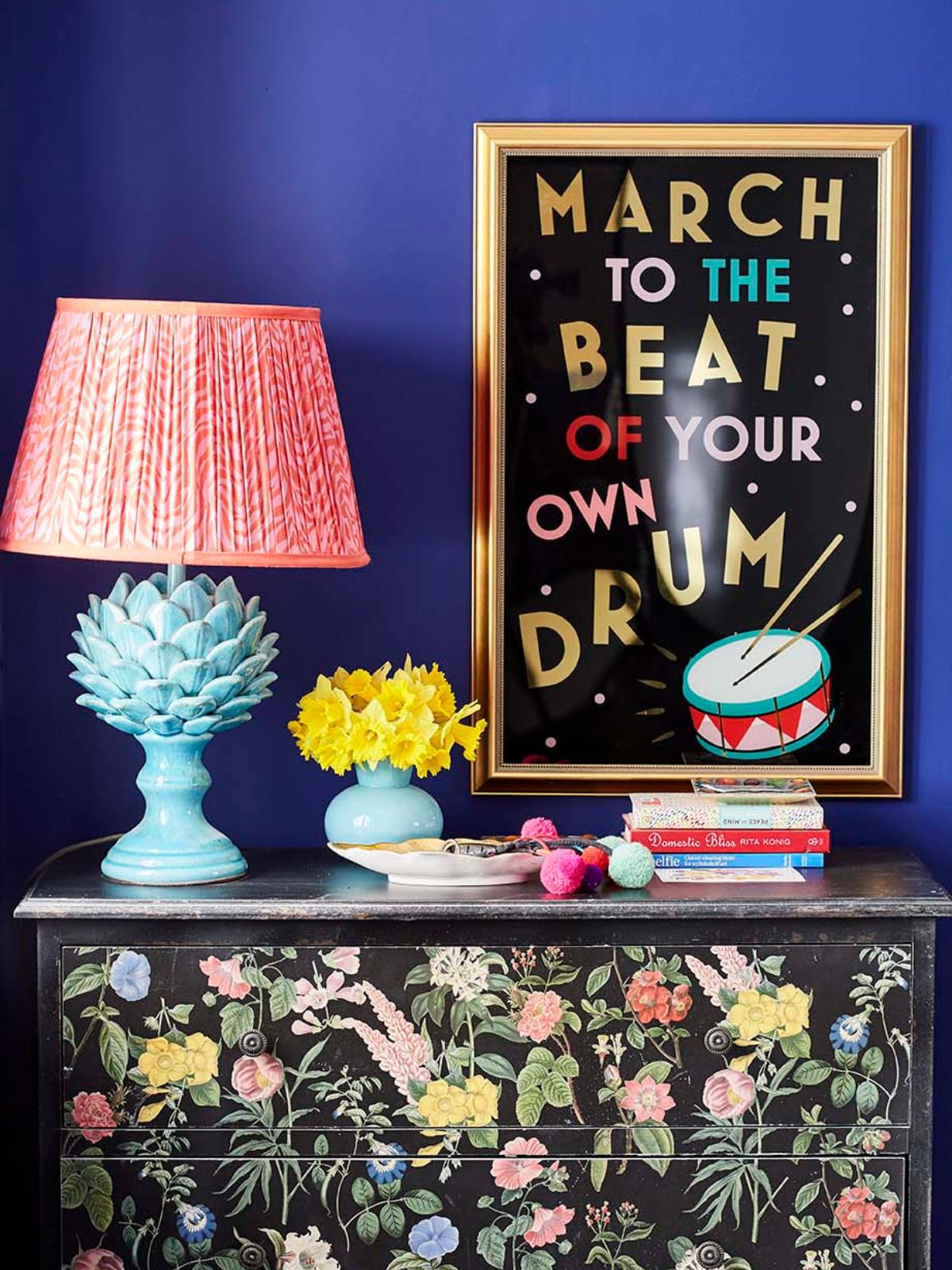
Alex May Hughs painting, vintage dresser, paint is Lazuli by Zoffany, Pooky lampshade
Collect art that means something to you
Learning how to collect art for your home isn’t about following experts advise or investing in expensive pieces. It’s about noticing what makes you stop, smile or feel something.
That might be a painting discovered at a flea market, a print bought on holiday, a family photograph, a handwritten note or something created by your children. Once framed and thoughtfully displayed, all of these things can become works of art.
One of my favourite artworks, by Alex May Hughes, hangs in my hallway where I see it every time I walk through the front door. Its words remind me of the life I want to live, so it brings me far more pleasure than something chosen simply because it matched the décor ever could, although I love the way the graphic typography contrasts with the floral pattern on the chest of drawers below.
A personal art collection is rarely created in one shopping trip, and that’s part of its magic. Give it time, trust your instincts and choose pieces because they speak to you.
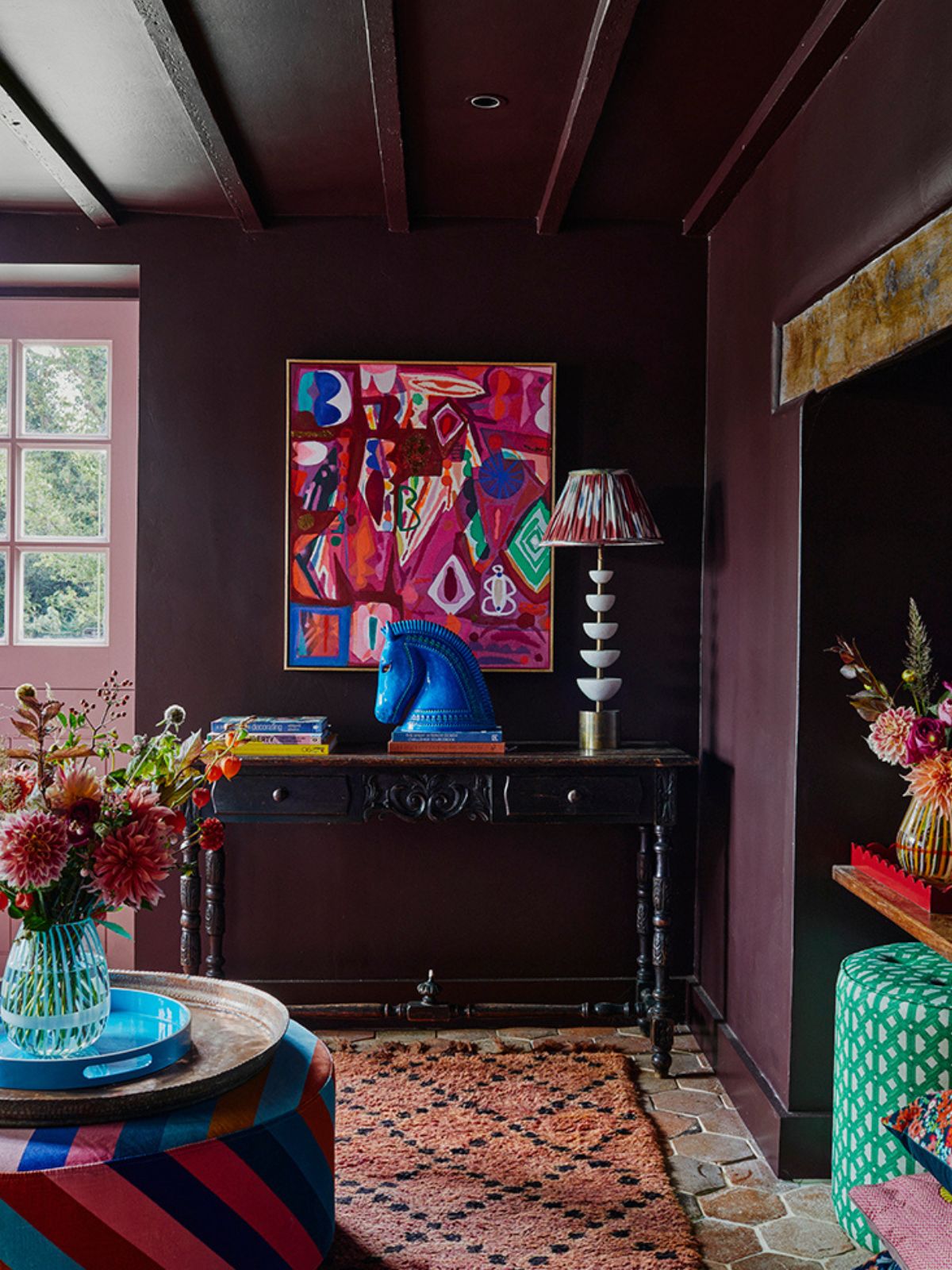
Artwork by Becky Blair Artist, walls in Córdoba by Little Greene, Pooky lampshade, footstool upholstered in Sherbert Stripe
Give artwork a fabulous backdrop
I absolutely love displaying artwork against deep, saturated wall colours. Shades such as navy, forest green, burgundy and rich chocolate can make the colours in a painting really sing.
Even art galleries are slowly realising that not all art looks best against a bright white wall. Rather than the wall colour overpowering the art, it often does the opposite: it frames the piece and helps it command attention.
And please don’t be afraid to hang art on patterned wallpaper, because pattern and artwork can look wonderful together. The trick is to create some kind of connection between them, perhaps through a shared colour, shape or decorative style.
A generous mount or strong contrasting frame will give the eye a little breathing space between the artwork and a busy patterned wall.
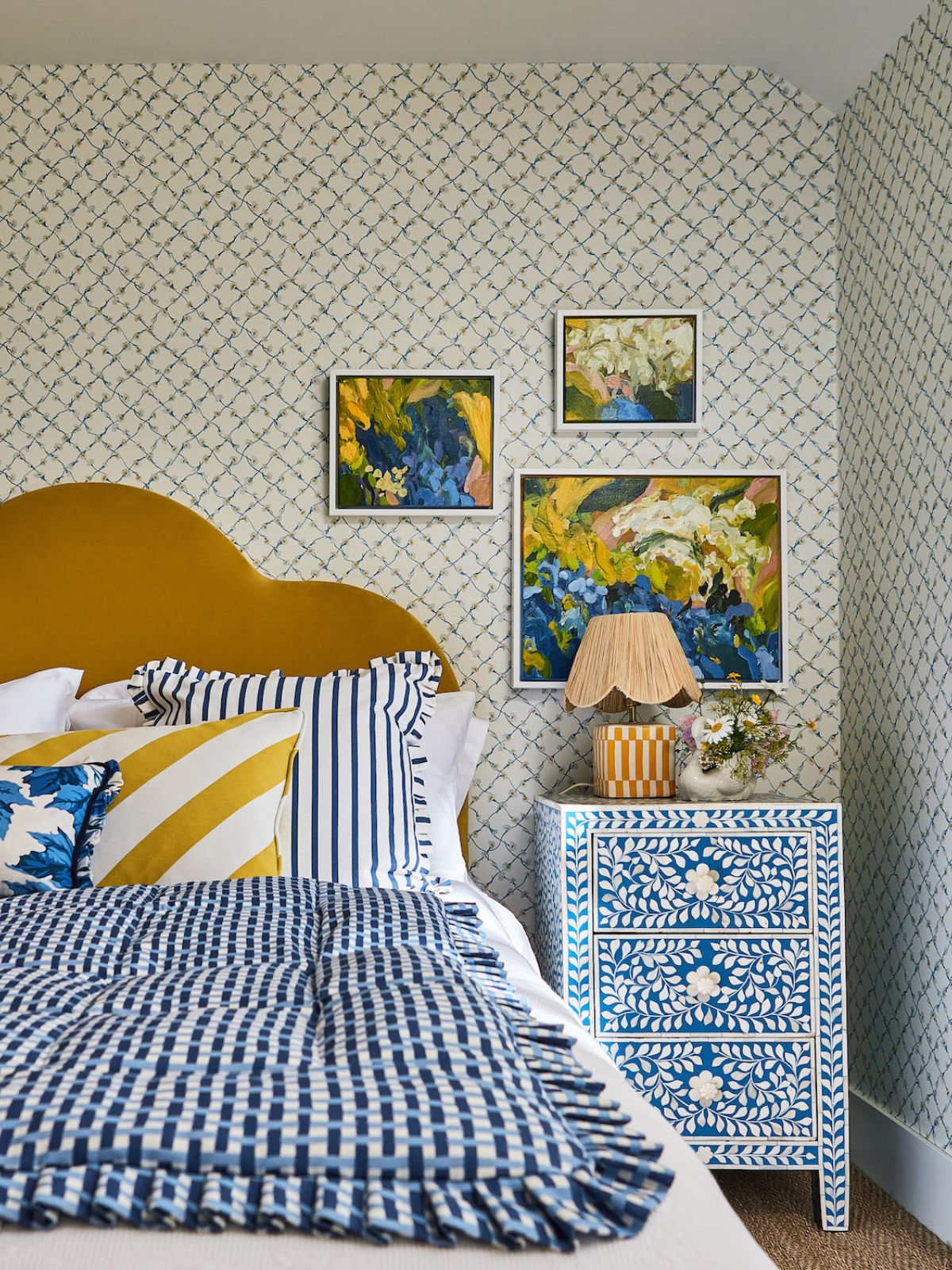
Artwork by Sophie Abbot Artist, Daisy Trellis Wallpaper in Lapis/Pearl from the Sophie Robinson x Harlequin Collection, custom-made bed Natural Mat, bedside table from Etsy
Don’t feel you have to centre everything
Artwork doesn’t always need to hang directly in the centre of a wall or line up perfectly above a bed, sofa or sideboard.
I rarely hang pictures dead centre. Instead, I prefer to think about how they relate to everything around them like the furniture, lighting fixtures, and architectural details.
In my guest bedroom, for example, the artwork sits to the left of the headboard and is partially hidden behind a bedside lamp. It sounds slightly unconventional, but it creates a relaxed, layered look that also makes the art feel connected to the whole room arrangement.
When hanging art above furniture, keep it close enough to feel part of the same composition. Too much empty space can make it look as though the artwork is floating away.
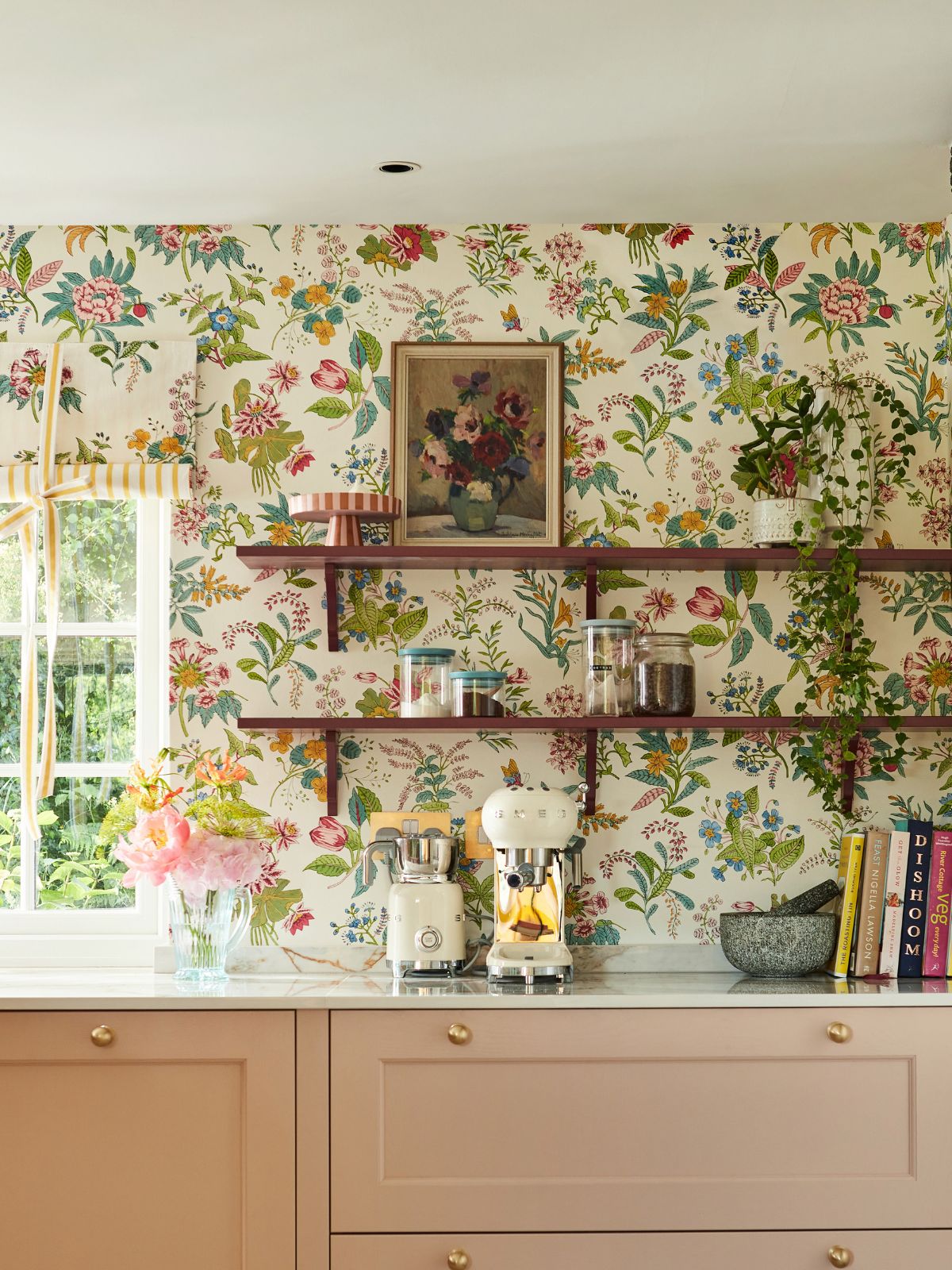
Vintage artwork, Wonderland Floral Wallpaper from the Sophie Robinson x Harlequin collection, Toppu Tray by OYOY Design, Ludlow Cabinets in Chalk Blush from Magnet
Remember that art doesn’t have to be hung
Some of my favourite displays are simply propped on shelves, mantels or sideboards.
Leaning artwork creates an instantly relaxed, lived-in feeling. It also means you can move pieces around whenever you fancy a change, which, if you’re anything like me, may be quite often!
Try placing a smaller frame in front of a larger painting, then mix in books, ceramics, flowers and treasured objects. Vary the heights and let a few pieces overlap slightly. It will help the display feel effortless rather than overly arranged.
This is also a brilliant option if you rent, frequently change your mind or simply can’t face making another hole in the wall.
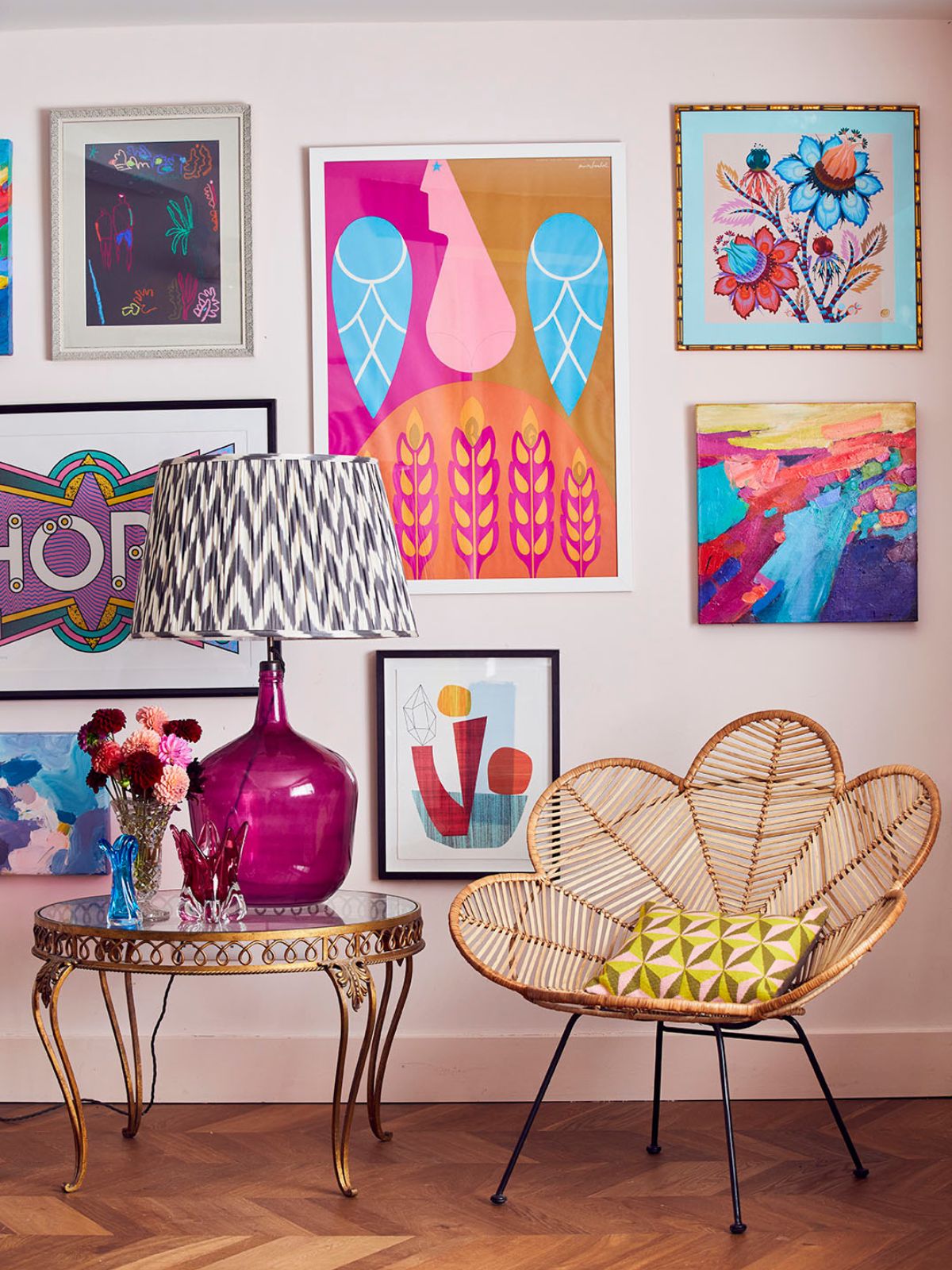
Gallery wall featuring art by Alex May Hughes, Studio Coverdale , Eloise Govier and vintage prints
Create a gallery wall that can grow
The best gallery walls evolve over time and feel personal because they bring together pieces collected at different moments, rather than looking as though they arrived as a matching set.
It’s also an opportunity to be playful and creative. Mix paintings, prints, photographs in different sizes and frame styles. You could even include textiles, plates, mirrors or small sculptural objects. However, the trick to making it all work is to find a common theme. This could be an art style or colour repetition that helps thread them all together.
Before hanging anything, arrange your collection on the floor and play with the composition. Begin with the largest or most important piece, then work outwards. Aim for balance rather than perfect symmetry and keep the gaps between pieces consistent. If you’re nervous about committing, make paper templates of the frames and temporarily attach them to the wall. You’ll be able to check the position and spacing before reaching for the drill.
And don’t worry about filling the entire wall immediately because leaving room for future discoveries is part of the fun.
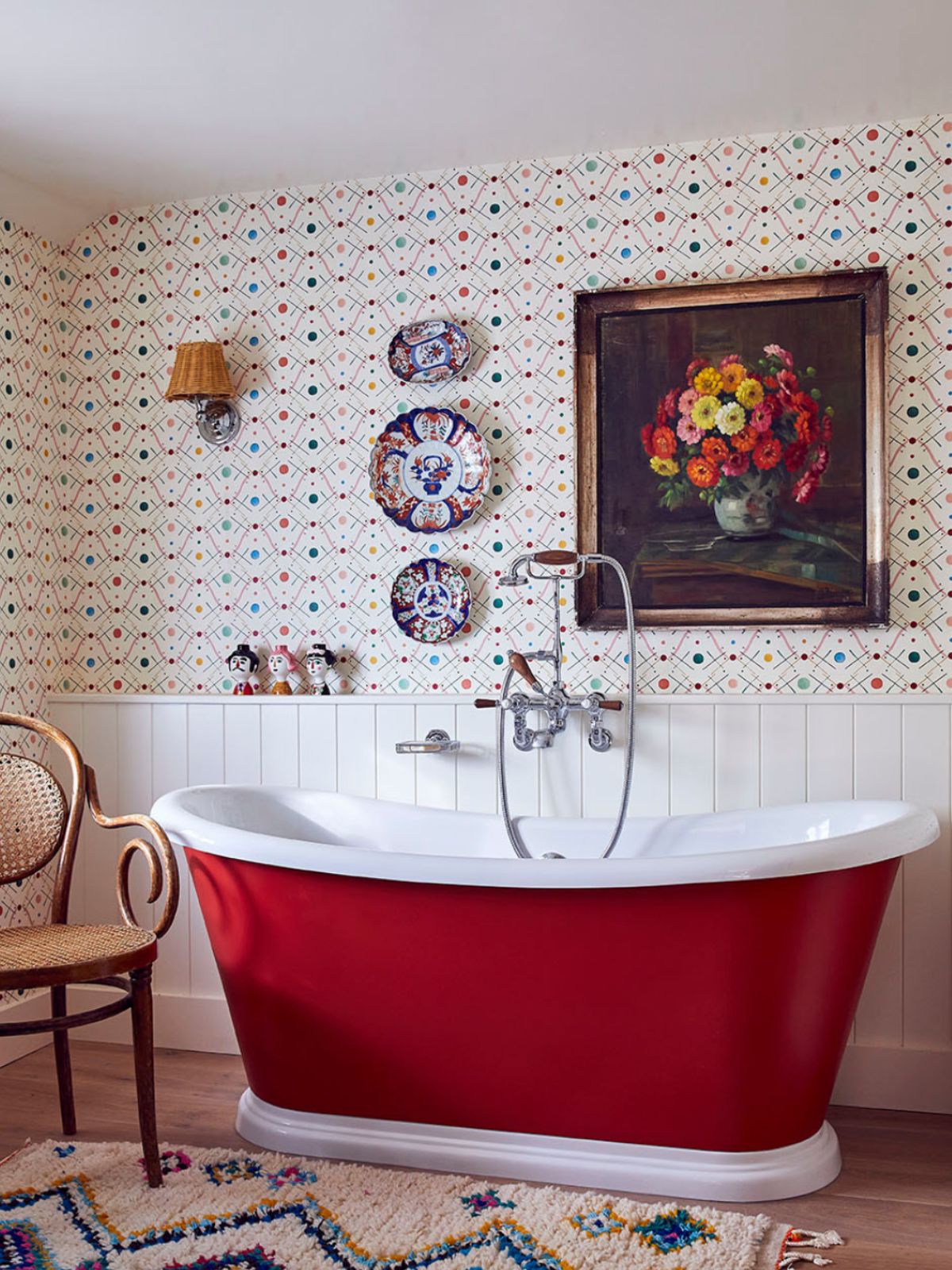
Vintage painting, Burlington Bathrooms bath painted in Blazer by Farrow and Ball, Improvisation Number 1 by Ottoline, Pooky rattan lampshade
Make it personal
Ultimately, displaying art at home isn’t about creating a perfect gallery or following a strict set of rules. It’s about surrounding yourself with things that lift your mood, stir a memory or simply bring you joy.
Buy original paintings if you can as it’s wonderful to support living artists’ work. But don’t overlook affordable prints, postcards, vintage finds, and personal mementoes. I like the high low mix of valuable pieces with priceless sentimental ones. Prop some, hang others and allow your collection to change as you do. I like to move my artwork around the house until it finds the perfect spot.
The result won’t just be a home that looks beautiful. It will be a home that tells your story and that, to me, is what makes an interior design truly special.
To find out more about the inspiration behind these room schemes read my most asked house questions blog and sign up to my newsletter to keep up with my design inspiration!